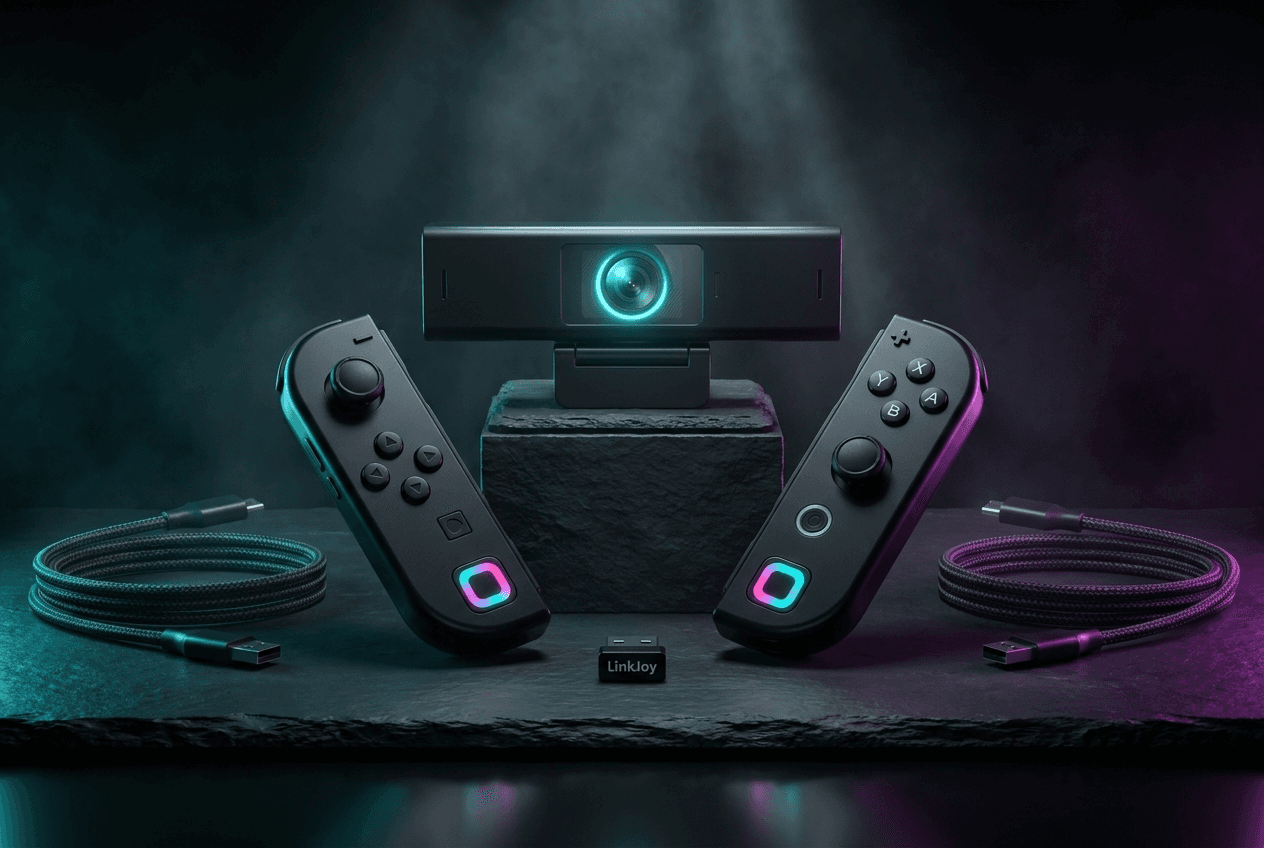
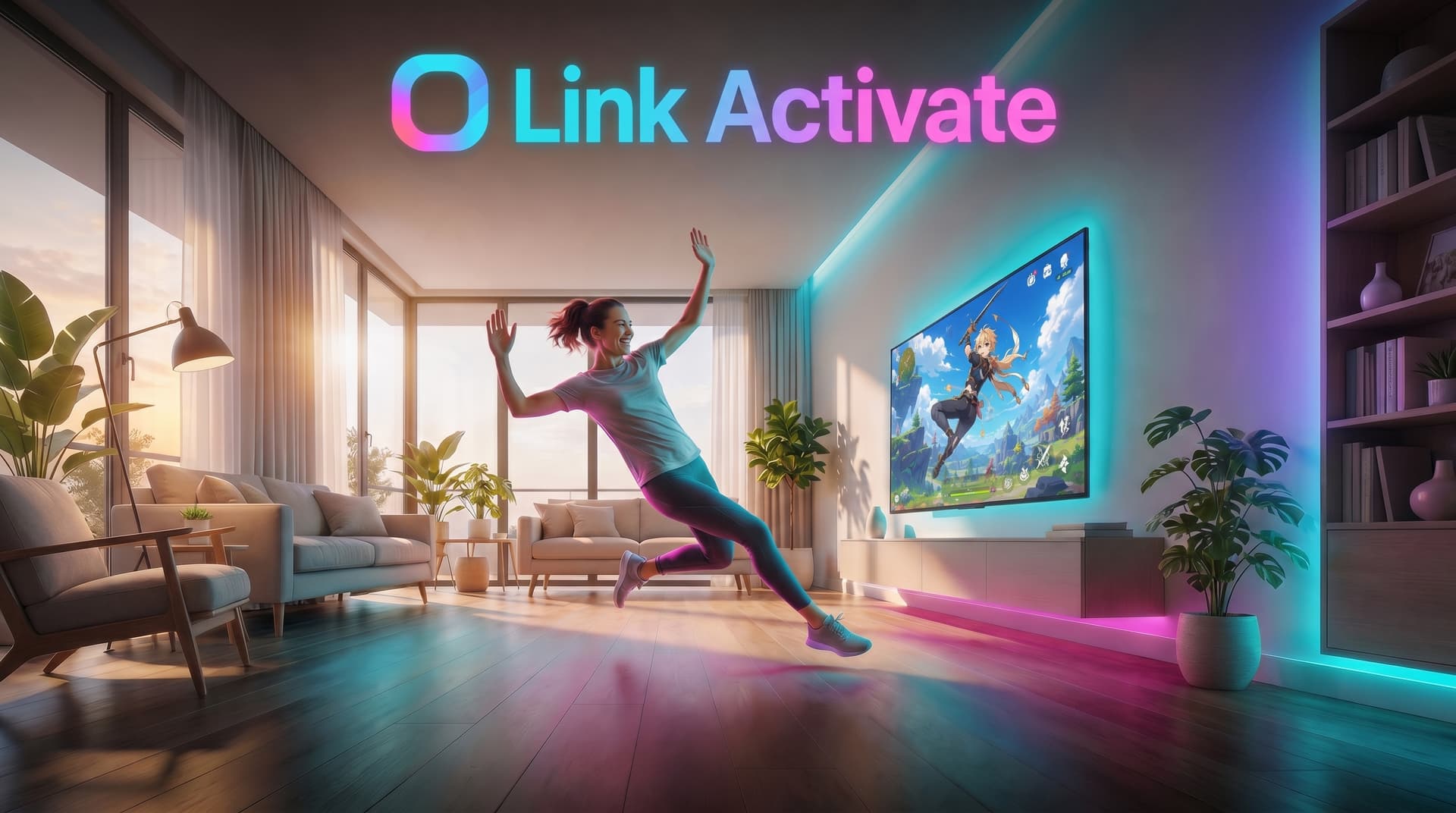
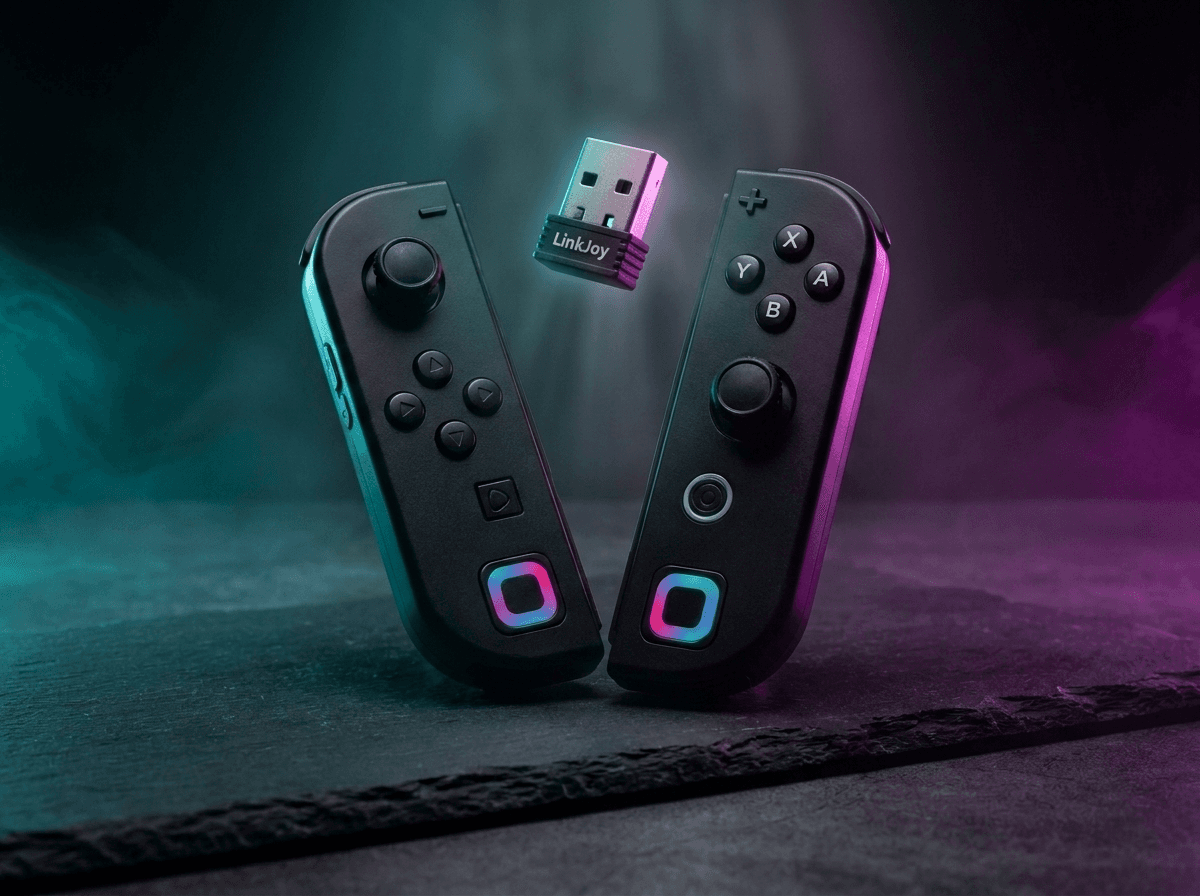
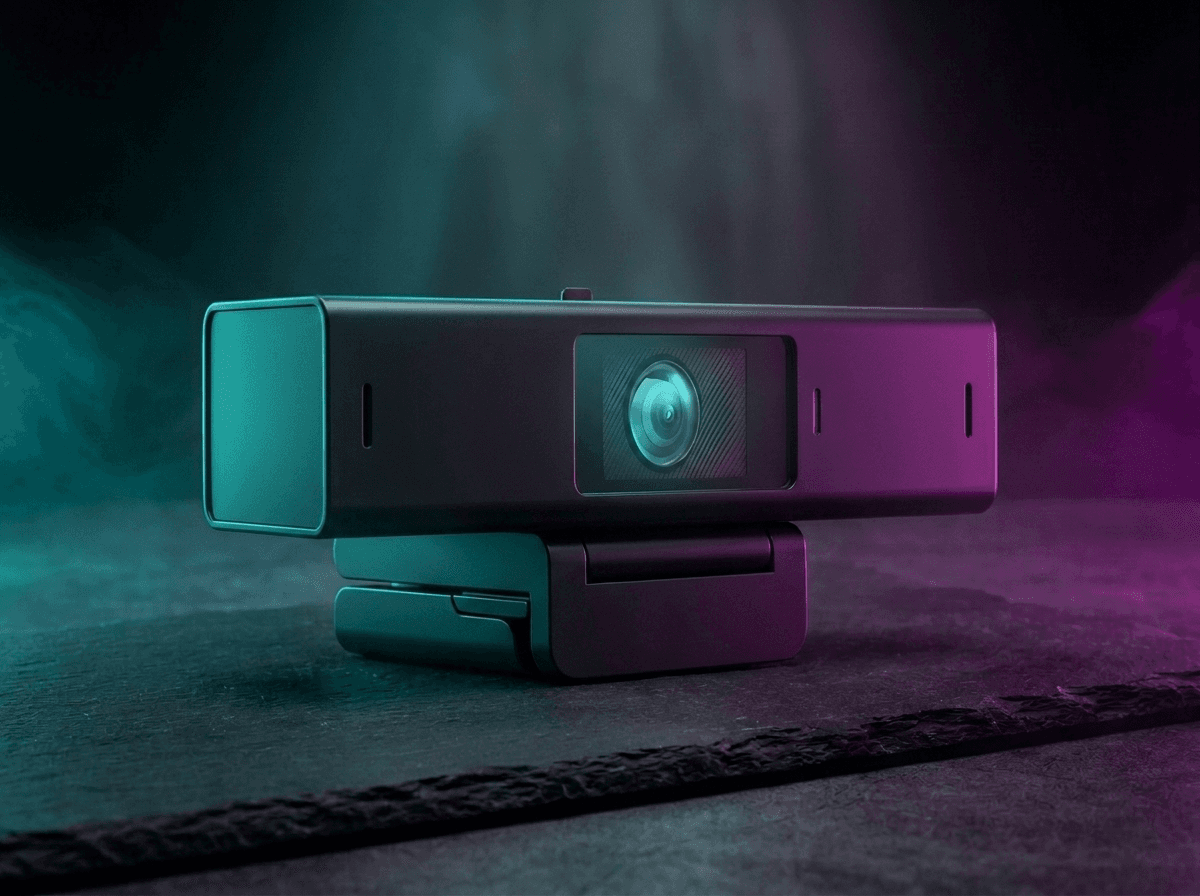
Time spent gaming shouldn't be time wasted. Put down the keyboard and mouse — play any game with your body and your voice.
Why did you build The Link?
It started with my own problem. I love games, but I kept finishing sessions with the same nagging feeling: that time was wasted. And more practically, years of sitting at a desk genuinely wreck your body. I refused to accept that playing games and taking care of your body had to be an either/or. So I built The Link: stand up and play with your whole body. Same game, same hours. But hours in a chair become hours of movement, and the time stops being wasted.
Keyboards, mice and gamepads work fine, don't they? Why replace them?
Because they're far older than you think. The keyboard layout comes from a nineteenth-century typewriter. The mouse is more than half a century old. The gamepad hasn't fundamentally changed in decades. Computing power has multiplied beyond counting, yet the way humans talk to computers is still "press plastic buttons with your fingers." I believe humanity needs a newer, lighter, closer-to-perfect way to interact with machines — not another layer stacked on the old peripherals, but one that makes them unnecessary.
Why pure vision and voice — not wristbands or headsets?
Because motion and speech are the interfaces written into our genes. For tens of thousands of years, humans have engaged the world through body and voice: wave, run, dodge, shout. None of it needs a manual. Anything you have to wear still means the human bending to fit the machine. Pure vision plus voice means zero wearables: one ordinary camera and one microphone is all it takes. You move, you speak, and the computer should simply understand. The less equipment, the closer to perfect.
What does it actually do today?
Install the software, point a camera at yourself — your phone can be the camera — and move. The Link translates your motion and voice commands into keyboard and mouse input in real time. To the game, you are a human-shaped controller, so no game needs to change anything: swing the staff in Black Myth: Wukong, roll in Elden Ring, all with your body. Popular games come with official motion models, ready out of the box; for any other game, you can record your own motion mapping.
There's a camera pointed at me. What about privacy?
All motion and voice recognition runs locally on your own computer. Not a single frame of video or a second of audio ever leaves your machine; our servers handle accounts, licensing, and only what you choose to sync or share. The most private data there is stays on your own device. That's both a promise and how The Link is built.
Where does this road lead?
Two steps. Right now we're the ones adapting: we translate your body into keyboard signals someone defined decades ago, and something always gets lost — those games were never built for a body in the first place. Once enough people are playing on The Link, it flips: game makers start adapting to us, and motion becomes the game's native input. I picture that moment a lot: no haptic suit and headset like in Ready Player One, no treadmill doing the walking under your feet — just your living room and a camera. You sidestep, and in that same instant, on screen, your character sidesteps. Immersion earned with empty hands, not strapped-on hardware. One to one — no translation, no loss.
Where can I find you?
The email address below goes straight to me. Links to every platform I'm on — Bilibili, Douyin, Xiaohongshu, YouTube and more — are right on this page. The longer version of why I'm building this is at Timetoraid.com.